









1. Understanding the Audience Management Hierarchy
Before diving into tactics, understand the three distinct audience layers in Meta Ads Manager.
Core Audiences for Cold Traffic Management
These are users you have no relationship with. You target them based on demographics, interests, and behaviors. Think of this as “fishing with a net.”
Custom Audiences for Warm Audience Optimization
This is your goldmine. Custom Audiences are built from your own data—website visitors, past purchasers, or email lists. These users know your brand; they just need a nudge.
Lookalike Audiences for Scaled Audience Targeting
Lookalikes are Meta’s way of finding more people like your best customers. You upload a source audience, and Meta finds similar users. This is the most powerful tool for scaling cold acquisition.
2. Building Custom Audiences: The Heart of Audience Management
You cannot master audience management without mastering data sourcing. Custom Audiences fuel the Meta algorithm.
The Pixel and Conversions API
Your Meta pixel is the baseline, but it’s becoming less reliable. To truly master audience management, implement the Conversions API (CAPI) . CAPI creates a server-to-server connection, ensuring conversion events are recorded even if browsers block the pixel.
High-Value Source Lists
Don’t just create “All Website Visitors.” Segment by intent:
- Engaged Shoppers: Viewed a product but didn’t buy.
- Past Purchasers: Separate one-time from repeat buyers.
- Content Consumers: Read your blog but haven’t shopped.
Customer List Uploads
Regularly upload your email subscriber list to Meta. This lets you reconnect with loyal followers where they’re most active.
3. Lookalike Audiences: Scaling Your Audience Management
Once you have solid Custom Audiences, Lookalikes (LALs) allow you to scale intelligently.
Size Matters
When creating a Lookalike, you choose a size percentage:
- 1% LAL: The most precise match. Best for high-ticket items.
- 3-5% LAL: Balance of reach and relevance. Ideal for prospecting.
- 10% LAL: Largest reach, least similarity. Use for brand awareness.
Source Quality Over Quantity
A Lookalike is only as good as its source. A LAL built from 1,000 repeat customers will outperform one built from 10,000 random newsletter signups. Prioritize “purchase LALs” over “page view LALs.”
4. Mastering Layering and Exclusions
This is where audience management becomes an art. Layering refines who sees your ads; exclusions prevent waste.
The Anti-Audience Approach to Audience Management
When running prospecting campaigns, exclude your existing Custom Audiences. Otherwise, you’ll waste budget showing “Welcome” offers to loyal customers ready to buy at full price.
Interest Layering
Don’t just target broad interests like “Coffee.” Layer with demographics. Targeting “Coffee” + “Small Business Owners” yields a more specific audience than “Coffee” alone.
5. Combating Audience Fatigue
One of the biggest killers of ROAS is audience fatigue—when the same group sees your ad too many times and stops noticing.
Frequency Caps
Set a frequency cap (e.g., “1 impression per 3 days”) in your ad settings. This limits overexposure and keeps CTR healthy.
The Refresh Rule
If your frequency exceeds 3.5 to 4.0 and CTR drops, you have fatigue.
- Creative Refresh: Change your image or video.
- Audience Expansion: If frequency is high but creative is fresh, your audience pool might be too small. Layer in new interests or expand your Lookalike percentage.
6. First-Party Data: The Future of Audience Management
With iOS changes and targeting restrictions, mastering audience management now means mastering first-party data.
Value Exchanges
Encourage users to identify themselves. Use lead forms and quizzes. Every email or phone number you gain is a signal immune to platform changes.
Retargeting with Personalization in Audience Management
Use that data for hyper-personalized campaigns.
- If someone abandoned a cart with a red shoe, show that exact shoe.
- If someone downloaded an ebook, show a related webinar offer.
This level of personalization requires robust segmentation, but the lift in conversions is substantial.
7. Testing: The Laboratory of Audience Management
Finally, adopt a testing mentality. What worked last quarter may not work this quarter.
The Ad Set Split Test
Use Meta’s A/B testing tool to pit audiences against each other with the same creative. Run tests between:
- Interest A vs. Interest B
- 1% Purchase LAL vs. 3% Purchase LAL
- Broad Targeting vs. Layered Interests
Let the data speak. The winning audience gets the budget.
Conclusion
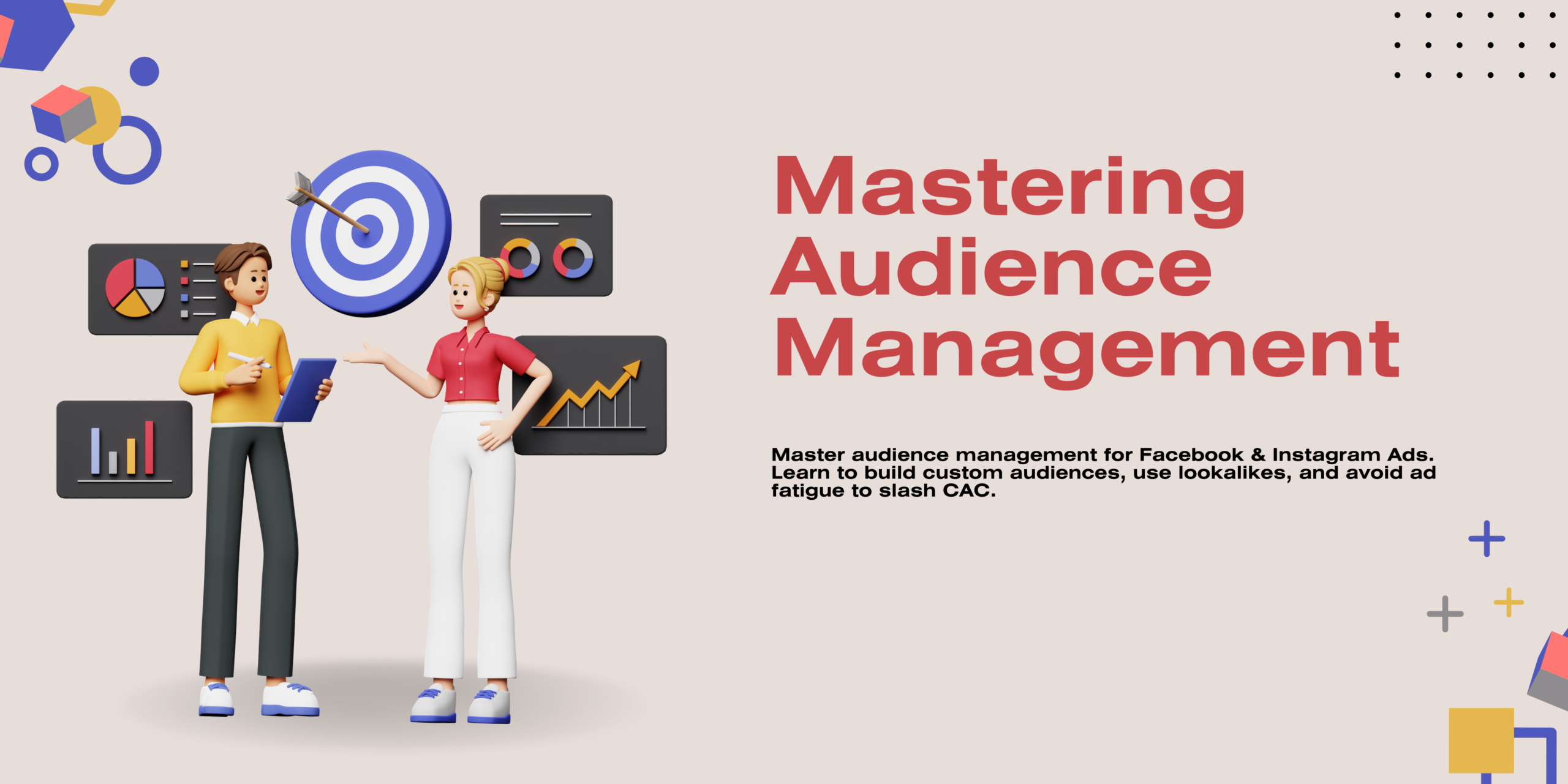
Mastering audience management for Facebook and Instagram Ads is no longer about picking interests and hoping for the best. It is a sophisticated discipline involving data integration, strategic exclusion, creative refresh cycles, and understanding Meta’s algorithm.
By building robust Custom Audiences, scaling with Lookalikes, and managing frequency, you transform your ad account from a cost center into a revenue engine. The algorithm is powerful, but it needs a skilled navigator. Master your audiences, and you master the platform.