







In the competitive landscape of digital advertising, the Cost Per Acquisition (CPA) is the metric that truly separates profitable campaigns from costly experiments. While clicks and impressions feel good, the only number that pays the bills is what you spend to secure a customer. If you’re finding that your customer acquisition costs are eating into your margins, it’s time to move beyond basic optimizations and adopt advanced ads management techniques.
Lowering your CPA isn’t about slashing budgets; it’s about increasing efficiency. It means ensuring every dollar works harder by improving your targeting, refining your messaging, and leveraging automation. Here are 10 advanced techniques to help you maximize returns and drive your CPA down .
1. Leverage Automated Rules to Control Cost Per Acquisition
Manual optimization is time-consuming and often reactive. To get ahead, you need to leverage platform automation. Many ad networks now offer advanced rules-based optimization. For instance, tools like CPA Goal algorithms allow you to set parameters that automatically pause or unlink underperforming placements .
Setting Thresholds to Protect Your Cost Per Acquisition
How it works: You set a critical spending limit and a performance rule (like a maximum effective CPA or a minimum number of conversions). When a placement hits the spending limit but fails to meet your conversion goals, the algorithm automatically stops it. This prevents budget drain and ensures your spend is allocated only to traffic slices that meet your KPIs .
2. Harness Machine Learning with Target CPA Bidding
If you aren’t using automated bidding strategies, you’re leaving money on the table. Platforms like Google Ads use Target CPA bidding, a machine learning-driven strategy that automatically sets bids to get as many conversions as possible at your specified target cost .
How Smart Bidding Reduces Average Cost Per Acquisition
The algorithm analyzes historical campaign data, device performance, browser types, and time of day to predict which clicks are most likely to convert. By feeding the machine clean conversion data, it learns to find users who exhibit buying signals, effectively lowering your overall acquisition costs over time .
3. Conduct a Strategic Landing Page Audit
Your ad might be flawless, but if the landing page fails to deliver, your CPA will skyrocket. A strategic landing page audit ensures that your post-click experience is optimized for conversion. This goes beyond just checking for broken links; it’s about message match.
Improving Conversion Rates to Lower CPA
Ensure that the language and offer in your ad are mirrored immediately on the landing page. If your ad promises “50% off running shoes,” the headline on the landing page must repeat that exact phrase. Additionally, audit for technical performance: 53% of visits are abandoned if a page takes longer than three seconds to load. Slow load times directly increase CPA by killing conversions before they start .
4. Improve “Creative-to-Offer” Match
Sometimes, the creative isn’t the problem—the angle is. Advanced advertisers focus on the pain points and emotional triggers that lead to sales rather than just listing product features . High-performing ads often use raw, user-generated content (UGC) style videos rather than overly polished brand ads. This feels more authentic and relatable to users scrolling through their feeds.
Aligning Creative with Intent to Optimize Cost Per Acquisition
To lower CPA, ensure your creative matches the user’s intent. A top-of-funnel audience needs educational content, while a retargeting audience needs a strong discount or social proof to close the deal .

5. Create Separate Funnels for Prospecting and Retargeting
A common mistake is lumping all audiences into one campaign. For advanced optimization, you must split your strategy:
Segmenting Campaigns by Funnel Stage to Control CPA
- Prospecting: Use broad targeting, lookalike models, and contextual targeting to find new users. These campaigns should have lower bids and focus on introducing value .
- Retargeting: Target users who have already visited your site or abandoned carts. These users are warmer, so you can afford higher bids because their likelihood to convert is greater.
By separating these, you prevent your retargeting budget from being eaten up by cold traffic costs, and you allow the algorithm to optimize specifically for each funnel stage .
6. Stack Lookalike Audiences with Interests
Broad targeting can work, but it often leads to high spend with low returns. To stabilize your CPA, try layering Lookalike audiences (based on your highest lifetime value customers) with stacked interest groups .
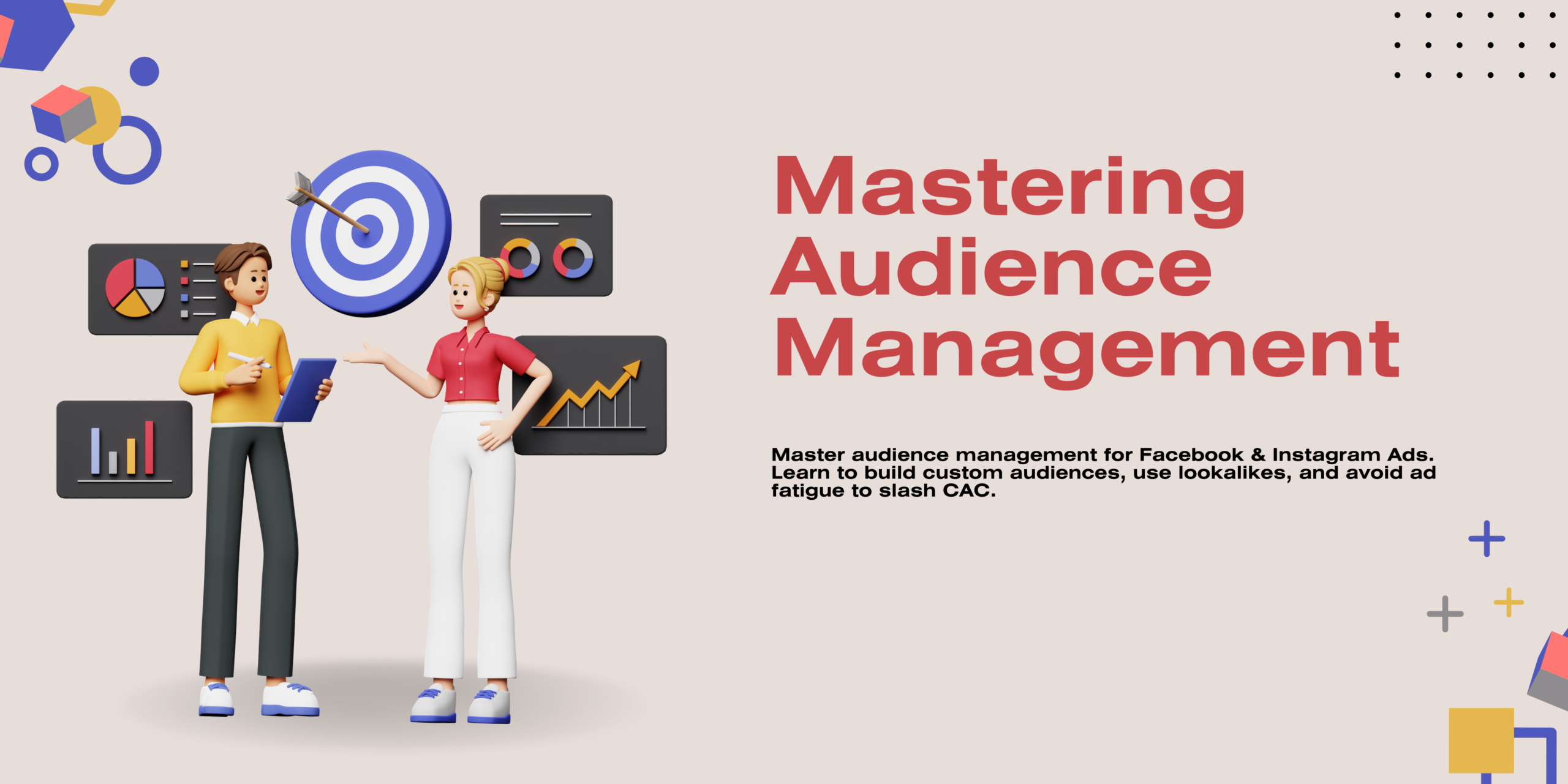
Refining Audience Targeting to Lower Customer Acquisition Costs
For example, instead of targeting just “fitness enthusiasts,” combine it with “online shopping,” “Stripe,” and specific magazine interests. This combo often performs better than broad interest alone because it narrows the field to people who not only have the interest but also the digital behavior of buyers .
7. Implement Frequency Capping to Avoid Ad Fatigue
Bombarding the same user with the same ad leads to diminishing returns. This is known as ad fatigue, and it drives up CPA because you’re paying for impressions that users are actively ignoring .
Managing Impressions to Protect Your Cost Per Acquisition
Set strict frequency caps to control how many times a user sees your ad.
- For prospecting placements, use tight caps (e.g., 1 impression per day) to maintain reach without annoyance .
- For retargeting placements, you can increase this slightly (e.g., 6-10 impressions per day) to stay top-of-mind, but monitor closely to ensure you aren’t oversaturating your warm audience .
8. Exclude Toxic Placements and Traffic
In programmatic advertising, not all inventory is created equal. Regularly reviewing your placement reports is essential to identify where your ads are appearing. If you’re spending money on mobile apps or websites that generate clicks but zero conversions, those placements are “toxic” to your CPA .
Use pre-bid filters to block non-performing categories and devices. For example, if data shows that Firefox or Safari users aren’t converting due to tracking limitations, excluding these browsers can immediately lower your CPA by reallocating that budget to higher-converting channels .
9. Diversify Ad Formats
If you’re only running static display ads, you’re missing out on higher-engagement formats that convert better. Diversifying into video, native ads, or rich media can capture attention in ways that banners cannot .
Engaging Formats That Lower Cost Per Acquisition
Snapchat Ads, for example, succeed because they use full-screen, vertical video that feels native to the platform. On mobile-first platforms, ads that blend in with user-generated content tend to have higher swipe-up rates and lower CPAs because they don’t interrupt the user experience .
10. Optimize the First Two Seconds of Your Video Ads
Attention spans are shorter than ever. If your video ad starts with a logo or a slow fade-in, you’ve already lost. The first two seconds must hook the viewer immediately .
Use movement, bold text overlays, or a face looking directly into the camera. Show the product in use immediately. By improving your view-through rate, you lower the cost of engagement, which feeds back into the algorithm as a positive signal, ultimately leading to a cheaper CPA .
Conclusion
Lowering your Cost Per Acquisition requires a blend of art and science. By implementing these advanced techniques—ranging from automated CPA rules and audience layering to landing page audits and creative optimization—you can transform your ad campaigns from cost centers into revenue drivers.
The key is continuous iteration. Test one variable at a time, let the data guide your decisions, and always keep the user experience at the forefront of your strategy.