









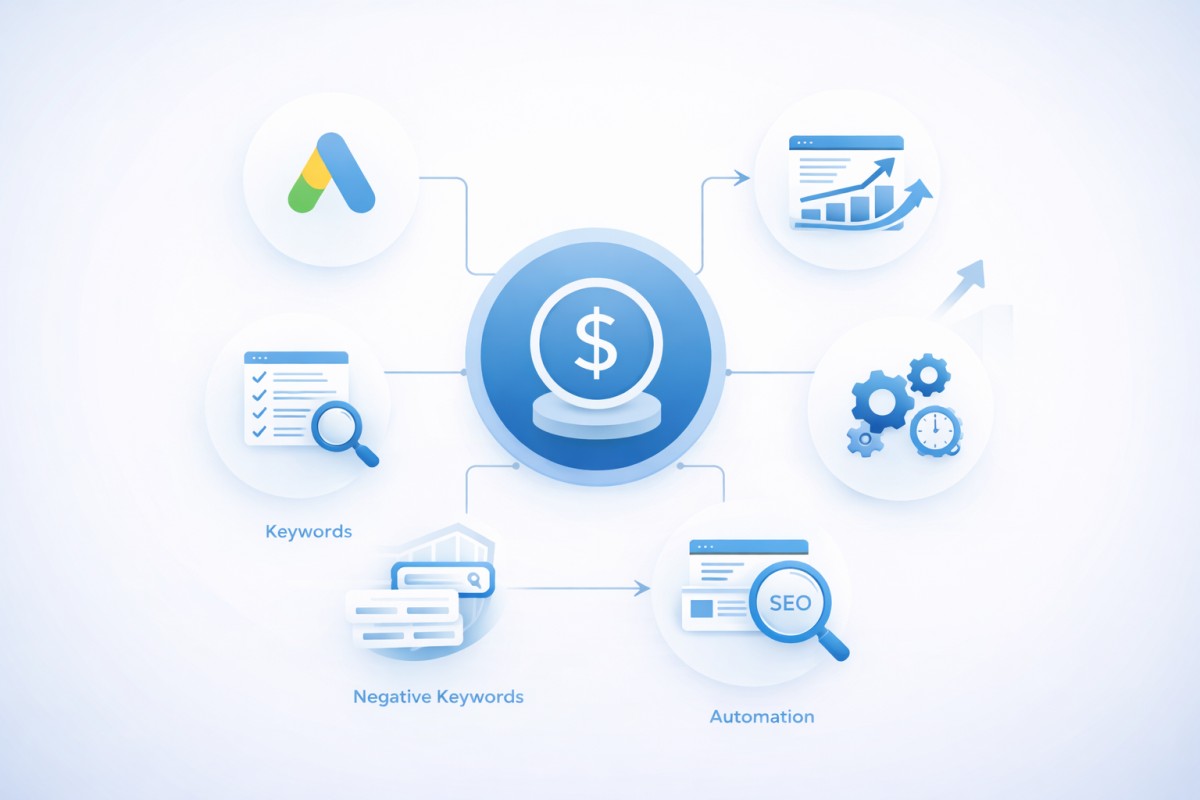
In the high-stakes world of digital advertising, your Pay-Per-Click (PPC) budget is more than just a number—it is the fuel for your growth engine. However, simply having a budget isn’t enough. The difference between market leaders and everyone else often comes down to one critical skill: budget management for PPC.
Throwing money at a campaign without a strategic framework is a fast track to wasted spend and a negative ROI. In fact, estimates suggest that a staggering 27% of all media spend on Google Ads is constrained by poor budgeting, leading to missed revenue opportunities worth billions globally .
Effective budget management isn’t about capping spend; it’s about intelligent allocation. It’s about ensuring every dollar is working toward a specific business goal.
1. Shift from Fixed Budgets to Demand-Led Allocation
For decades, the “Traditional” approach to PPC budgeting ruled the roost: allocate a fixed amount at the start of the month and stop spending when it’s gone.
This method is akin to a store on a busy street closing at noon because they’ve met their sales target, turning away eager customers .
To make this work:
- Know your unit economics: Calculate your break-even Customer Acquisition Cost (CAC).
- Set your bidding strategy: Configure your Google Ads campaign to use automated bidding (like Target CPA or Target ROAS) with the targets derived from your business economics.
- Forecast relentlessly: Use forecasting tools to predict spend and performance. This bridges the gap between marketing’s need for flexibility and finance’s need for predictability.
2.The 70/30 Rule for PPC Budget Allocation
Even with a demand-led model, you need a framework for how you allocate funds within your account. A common pitfall is putting all your budget into “safe bets” and never discovering the next big winner, or conversely, gambling too much on unproven tests.
The Fix: The 70/20/10 Split
A mature PPC budget should be split into three conceptual buckets :
- 70% to “Evergreen” Campaigns: The majority of your budget should go to proven, consistent performers. These are your branded terms, your best-performing non-branded campaigns, and your retargeting lists.
- 20% to “Testing” Campaigns: Dedicate a significant portion to testing new variables. This includes new ad copy, different audiences, or experiment with keywords identified through tools like Semrush or Ahrefs .
- 10% to “Moonshots” or Innovation: This is for exploring new platforms (like TikTok Ads or Pinterest) or entirely new campaign types (like Demand Gen or Performance Max).
3.Data-Driven PPC Budget Management to Stop Wasted Spend
Before you can allocate effectively, you must stop the leaks. Wasted spend is often hidden in plain sight, draining your budget with no return. Common culprits include irrelevant clicks, low-quality score keywords, and the silent thief: ad fraud .
The Fix: Data-Driven Pruning
- Implement Negative Keywords: This is the lowest-hanging fruit. Regularly review your search term reports to find queries triggering your ads that are irrelevant to your offer. If you sell luxury furniture, add “cheap,” “used,” and “free” as negative keywords immediately .
- Audit for Ad Fraud: Malicious bots and click farms can fake clicks, wasting your budget and skewing your data. “A percentage of their ad budget gets wasted on clicks that aren’t of value to them, leading to skewed campaign data” .
- Leverage the 80/20 Rule: Analyze your campaigns. Often, 80% of your results come from 20% of your campaigns. Identify the bottom-performing 20% of campaigns or keywords that consume budget without delivering ROI.

4. Maximize Impact by Aligning PPC with Organic Search
One of the most overlooked strategies for PPC budget allocation is synergy with your SEO team. Paid and organic search often compete for the same real estate, but they can work together to free up budget .
The Fix: The SEO/PPC Feedback Loop
- Bid Down Where You Already Rank: Conduct an audit of your paid keywords. Identify terms for which you already rank in the top 3 organic positions with a high click-through rate (CTR) . If you already own that traffic for free, why pay for it? Reduce or pause PPC spend on these keywords and redirect that budget elsewhere. The organic listing will continue to drive traffic .
- Bid Up Where You’re Weak: Conversely, identify business-critical keywords where your organic ranking is poor (e.g., page 2 or lower), but your competitors are dominating the first page . These are prime opportunities to increase PPC spend.
5.Intent-Based Keyword Allocation for PPC Budget Management
Not all keywords are created equal. A high-volume keyword can feel attractive, but if the searcher’s intent is informational, they aren’t ready to buy. Spending heavily on “what is PPC” will generate traffic but few sales .
- Top of Funnel (Informational): Allocate a smaller portion of the budget here. Bids should be lower. The goal is awareness.
- Middle of Funnel (Commercial): Allocate more budget here for keywords like “best CRM software” or “reviews.”
- Bottom of Funnel (Transactional): This is where the majority of your conversion-focused budget should go. Use Exact Match and Phrase Match for terms like “buy Salesforce CRM” or “PPC management quote” .
6.Automating PPC Budget Management for Efficiency
Manual budget adjustments are time-consuming and often reactive. Modern PPC budget management relies on automation to make micro-adjustments at scale.
The Fix: Implement Automated Rules
- Dayparting (Day-of-Week Adjustments): Use automated rules or scripts to adjust budgets based on performance trends. For example, if your conversions drop on weekends, create a rule to lower your daily budget by 20% on Saturdays and Sundays .
- Performance-Based Budgeting: Set up scripts that automatically increase the budget for campaigns with a ROAS above 500% and a low CPA, and decrease it for underperforming campaigns . Tools like Optmyzr or even Google Ads scripts can handle this at an hourly level, ensuring you never miss an opportunity or blow your budget .
Conclusion
Effective budget management for PPC is a continuous cycle of analysis, adjustment, and refinement. By moving away from rigid, fixed budgets and adopting a demand-led, intent-focused, and data-driven allocation strategy, you can ensure that every dollar you spend is an investment, not an expense.
Stop simply managing your budget and start engineering it for maximum impact. Audit your spend today, plug the leaks, and reallocate toward the strategies that truly drive growth.