









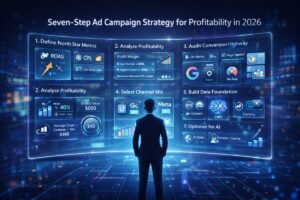
Throwing money at Facebook and Google and hoping for the best is not a strategic approach—it is a fast track to a depleted budget. In the hyper-competitive digital landscape of 2026, where algorithms are powered by artificial intelligence and user data is more guarded than ever, profitability depends on a structured ad management framework. Whether you are a small business owner or a marketing student, you need a roadmap. A profitable ads management strategy ensures that every dollar you spend works toward a specific goal, whether that is an online sale, a phone call, or a newsletter signup. Without a clear paid media plan, you are essentially gambling with your marketing budget rather than investing it. Here is a seven-step guide to building an ad campaign strategy that drives profit in 2026.
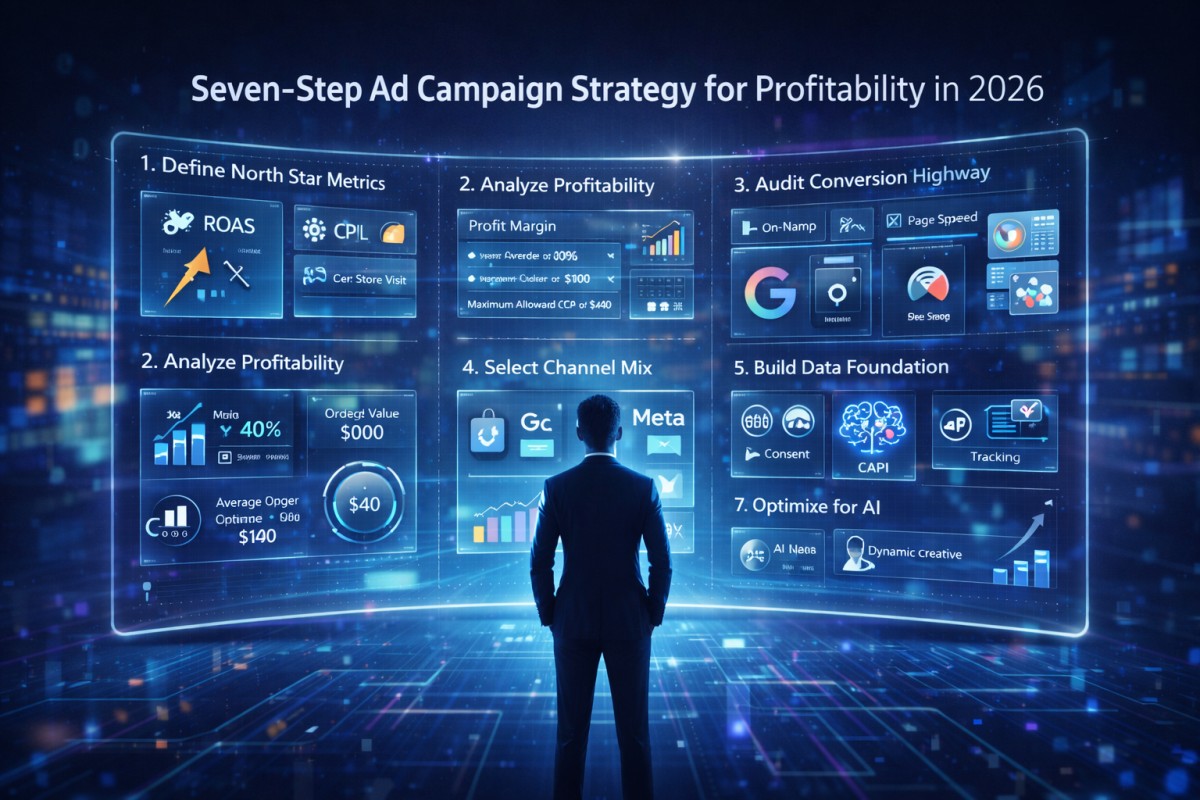
Step 1: Define Your “North Star” Metrics to Guide Your Ads Management Strategy
Before you write a single headline or upload a creative asset, you must define what “profitability” actually means for your business.
Instead, identify your “North Star” metric.
- For eCommerce: This is usually Return on Ad Spend (ROAS) . If you spend $100 and make $400, your ROAS is 4x.
- For Lead Generation: This is Cost Per Lead (CPL) and, more importantly, Cost Per Qualified Lead.
- For Local Businesses: This might be Cost Per Store Visit or Cost Per Phone Call.
Step 2: Master the Math of Profit Within Your Ads Management Strategy
To ensure your ads are profitable, you must know your margins. This is the step most beginners skip. You need to understand your break-even point.
Let’s do the math:
- Average Order Value (AOV): How much does the average customer spend? (e.g., $100)
- Profit Margin: After product costs, shipping, and overhead, how much is pure profit? (e.g., 40% = $40)
- Maximum Allowable CPA: If you want to break even, your Cost Per Acquisition cannot be higher than your profit margin ($40).
Therefore, if you acquire a customer for $40, you break even. To be profitable, you need to acquire that customer for less than $40 (e.g., $30).
Step 3: Audit Your “Conversion Highway” for Better Ad Campaign Management
In 2026, your ad is only as good as the destination it leads to. Driving traffic to a slow, confusing, or irrelevant website is like pouring water into a leaky bucket.
Before spending money, audit what experts call the “Conversion Highway” :
- On-Ramp (The Ad): Does your ad set the right expectation? If the ad promises a “50% discount,” the landing page must feature that discount immediately.
- The Road (Page Speed): Mobile users are impatient. A landing page that takes longer than 3 seconds to load will kill your profitability. Use Google’s PageSpeed Insights or PageSpeed Expert to check your site speed.
- The Destination (User Experience): Is the checkout or form simple? Does it ask for too much information? Removing friction (like forcing account creation) can drastically increase your conversion rate.
Step 4: Choose the Right Channel Mix for Your PPC Management Strategy
Not all ad platforms are created equal. In 2026, a profitable strategy rarely relies on a single channel. However, spreading yourself too thin as a beginner is dangerous. Focus on the two giants first, then expand.
Google Ads (Intent)
Use Google when you want to capture people who are already looking for what you sell. This is “demand capture.”
- Best for: Bottom-of-funnel conversions (sales, immediate leads).
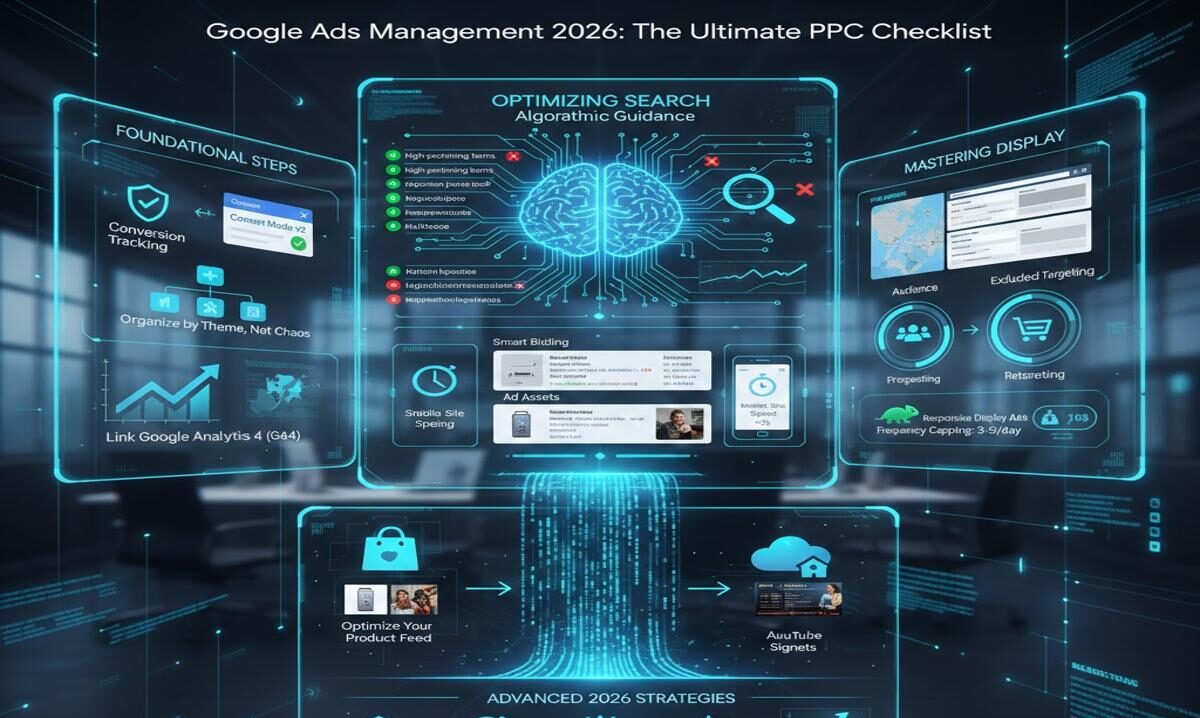
- 2026 Tactics: Master Performance Max campaigns for eCommerce. Ensure your product feed in Google Merchant Center is optimized with high-quality images and accurate titles, as this feeds the AI.
Meta Ads (Discovery)
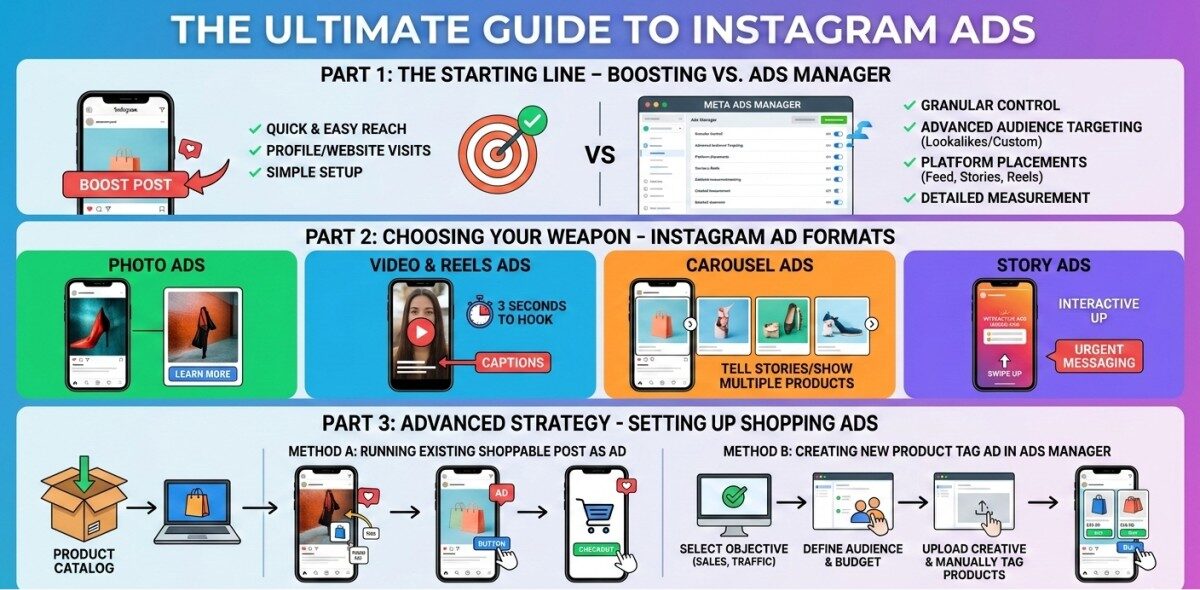
Use Meta (Facebook/Instagram) when you want to show people something they didn’t know they needed.
- Best for: Brand awareness, retargeting, and impulse buys.
- 2026 Tactics: Leverage first-party data. Upload your email customer list to create a “Lookalike Audience” to find new people similar to your best buyers. Prioritize authentic, short-form video content (Reels) over polished stock photography.
Step 5: Build a Data-First Foundation for Your Ads Management Strategy
In the post-cookie era, you cannot manage what you cannot measure. If your tracking is broken, the AI platforms are flying blind.
To ensure profitability, you must establish a robust data foundation:
- Install the Meta Pixel and Conversions API (CAPI): The Pixel tracks browser activity, but CAPI sends data server-to-server.
- Set Up Google Ads Conversion Tracking: Ensure that every purchase, signup, or call is counted as a conversion in your Google Ads account.
- Enable Consent Mode v2: With privacy regulations tightening in regions like the EU, you must respect user consent.
Step 6: Structure Campaigns for AI, Not Humans
In 2026, the most profitable ads management strategies are those that feed the machine learning algorithms effectively.
- Consolidation is Key: Instead of having 20 different small campaigns, consolidate your budget into fewer, larger campaigns.
- Use Audience Signals: When setting up a Performance Max campaign, you must provide “Audience Signals.”
- Creative Variety: Upload multiple images, videos, headlines, and descriptions. The AI will automatically test different combinations (dynamic creative) to find the winning formula.
Step 7: The Optimization Loop (Analyze, Iterate, Scale)
Launching the campaign is not the finish line; it is the starting line. A profitable ads management strategy relies on a continuous cycle of improvement.
Week 1-2: The Learning Phase
Do not make drastic changes during this period. The AI is exploring and collecting data. Let it run.
Week 3-4: Analysis
Look at the data. Use the “3 C’s” framework:
- Creative: Which images or videos have the highest click-through rate (CTR)? Pause the low performers.
- Context: Which placements (Instagram Stories vs. Facebook Feed) are driving the cheapest conversions?
- Conversion: Where are people dropping off? Is it on the landing page? If so, go back to Step 3 and fix the page.
Conclusion: Profit is a Process
Creating a profitable ads management strategy in 2026 is not about finding a magic “hack.” It is a systematic process. It starts with knowing your numbers, builds a foundation with proper tracking, and leverages AI through smart campaign structure.
By following these seven steps—from defining your North Star metric to continuously optimizing based on real data—you transform your advertising from a cost center into a reliable profit engine.