









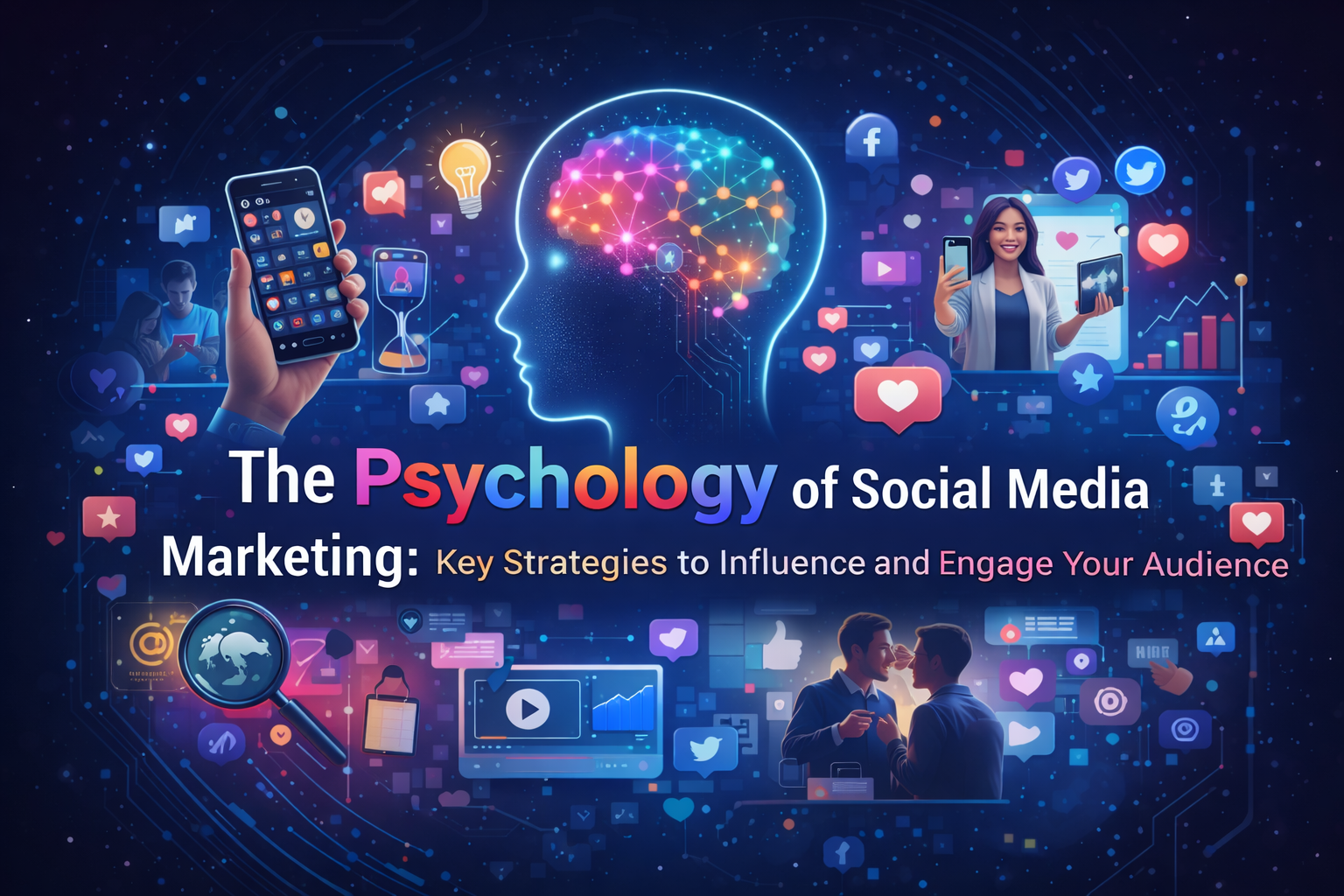
In 2026, social media marketing has evolved far beyond posting pretty pictures and catchy captions. The brands winning today are those that understand the psychology of social media marketing—the underlying mental processes that drive user behavior, engagement, and purchasing decisions.
Every scroll, like, comment, and share is driven by psychological forces that marketers can learn to harness . This comprehensive guide explores the key psychological principles that influence audience behavior and provides actionable strategies to apply them to your social media marketing.
Why Psychology Matters in Social Media Marketing
Social media platforms are, at their core, psychological environments. Users don’t just consume content—they react emotionally, seek validation, build identities, and connect with others . Understanding the psychology of social media marketing means understanding why people behave the way they do online.
Recent research from TikTok’s 2026 forecast reveals a fundamental shift: impulse buying is losing ground to intentional decision-making . Consumers now seek “Emotional ROI”—they want to feel confident and informed after engaging with content, not just hyped or rushed . This makes psychological understanding more critical than ever.
The Core Psychological Principles of Social Media Influence
1. Emotional Triggers: The Engine of Virality
Emotions drive sharing. Research on viral marketing campaigns shows that high-arousal emotions—both positive (joy, awe) and negative (anger, anxiety)—significantly increase the likelihood of content being shared .
How to apply this:
- Create content that evokes joy, inspiration, or even constructive outrage
- Use storytelling that tugs at heartstrings—Dove’s “Real Beauty Sketches” campaign generated massive engagement by tapping into women’s emotional self-perceptions
- For video content, place your emotional hook in the first 3 seconds to capture attention
2. Social Proof: The Power of the Crowd
Social proof is one of the most powerful forces in social media marketing . When people see others engaging with content or endorsing products, they instinctively assume those choices are correct. This is why posts with high engagement attract even more engagement—it’s a psychological snowball effect.
How to apply this:
- Encourage user-generated content (UGC) and feature it prominently
- Display social proof metrics (likes, shares, testimonials) where visible
- Partner with influencers whose followers trust their recommendations
- Create branded hashtags that build community and make user content searchable
3. The Curiosity Gap: Igniting the Need to Know
Humans are wired to seek closure. When we encounter incomplete information, our brains create a curiosity gap that demands resolution . This psychological trigger is why clickbait headlines work—but ethical marketers can use it without deception.
How to apply this:
- Craft headlines that tease value without giving everything away
- Use storytelling formats where the audience must stick around for the reveal
- Create “loop content” that opens a question and answers it within the same post
- Example: Instead of “5 Tips for Better Engagement,” try “The Engagement Strategy I Almost Didn’t Share”
4. Social Identity and Self-Expression
People use social media to build and express their identities. When users share content, they’re often signaling something about who they are or want to be . This is why identity-relevant content performs so well—it becomes a tool for self-expression.
How to apply this:
- Create content that helps users articulate their values and beliefs
- Develop brand communities where belonging becomes part of identity
- Use “deep content” that reflects sophistication or insider knowledge—users share it to enhance their own image
- Align your brand with causes and values your audience cares about
5. The Familiarity Principle: Similarity Breeds Connection
Research consistently shows that people are drawn to others (and brands) they perceive as similar to themselves . This similarity-attraction effect operates on multiple levels: demographics, interests, values, and even communication style.
How to apply this:
- Conduct deep audience research to understand your followers’ psychographics
- Match your brand voice to your audience’s communication style
- Use relatable scenarios and authentic representations in visuals
- Dove’s use of real women (not models) in campaigns creates powerful similarity-based connections
6. Reciprocity and Value Exchange
The principle of reciprocity is simple: when someone gives us something, we feel compelled to give something back. In social media, this translates to providing genuine value before asking for engagement or sales.
How to apply this:
- Share genuinely useful information, not just promotional content
- Offer free resources, templates, or insights
- Engage authentically with comments and messages—your attention signals value
- Create content that helps users make better decisions, which builds trust over time
7. Scarcity and Urgency: Primal Triggers
Our brains are hardwired to avoid missing out. Scarcity (limited availability) and urgency (limited time) tap into ancient survival instincts that still influence modern behavior .
How to apply this:
- Highlight limited quantities or time-sensitive offers
- Use countdown timers for promotions
- Create FOMO (fear of missing out) through exclusive access or early-bird opportunities
- Frame messages around what users might lose by not acting
8. The Peak-End Rule
Psychological research shows that people judge experiences largely based on the peak moment and the ending—not the average of the entire experience. This peak-end rule applies to content consumption too.
How to apply this:
- Design content with strong emotional peaks (surprise, delight, insight)
- End videos and posts with memorable takeaways
- For longer content, ensure the conclusion is satisfying and reinforces your message
- Place your strongest points where they’ll have maximum impact
Platform-Specific Psychological Considerations
Instagram: Visual Identity and Social Comparison
Instagram remains driven by visual aesthetics and social comparison. The platform’s shift to “Views” as the primary metric reflects how users consume content rapidly, making strong visual hooks essential .
YouTube: Deep Engagement and Parasocial Relationships
YouTube fosters parasocial relationships—one-sided connections where viewers feel they “know” creators . Brands that cultivate consistent, authentic personalities benefit from these powerful bonds.
Conclusion: The Future of Psychological Marketing
The psychology of social media marketing in 2026 is about understanding humans, not just users. As AI and automation handle more routine tasks, the “irreplaceable instinct”—human judgment, empathy, and connection.
Brands that succeed will be those that:
- Create authentic emotional connections
- Help users feel confident and informed
- Build genuine communities around shared identity
- Respect the intelligence and autonomy of their audience
By applying these psychological principles thoughtfully and ethically, you can create social media content.