









In the fast-paced digital landscape of 2026, the line between brand building and direct response has officially blurred. Today’s consumers don’t think in terms of “funnels”; they expect a seamless experience, whether they are discovering a brand for the first time or clicking “buy” on a repeat purchase . For marketers, this shift necessitates a move away from siloed advertising towards a cohesive full-funnel marketing strategy.
But a full-funnel strategy is only as strong as its execution. This is where professional ads management takes center stage. Far beyond simply boosting posts or setting a budget, modern ads management is the engine that drives awareness, nurtures consideration, and secures conversions. By leveraging AI-driven insights, channel-specific tactics, and meticulous data analysis, advertisers can guide potential customers through every stage of their journey.
Why a Full-Funnel Marketing Approach Requires Integrated Ads
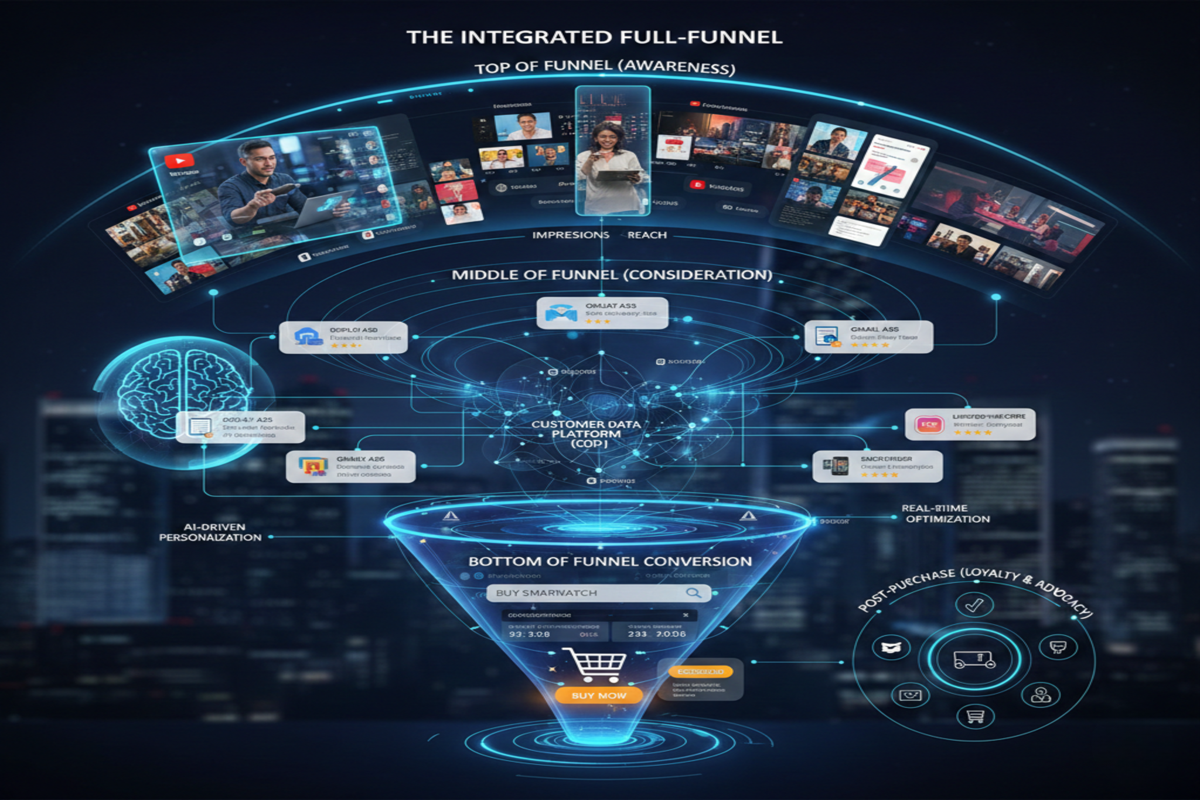
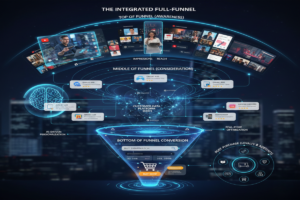
Before diving into ad tactics, it’s essential to understand the modern marketing funnel. While traditional models were linear, today’s customer journey is a dynamic, often non-linear path. However, the core stages remain the same:
- Top of Funnel (TOFU) – Awareness: The goal here is reach. You are introducing your brand, product, or service to a cold audience who has a problem but may not know your solution exists.
- Middle of Funnel (MOFU) – Consideration: Now that they know you, prospects are evaluating their options. They are consuming content, reading reviews, and comparing features. Your goal is to build trust and establish authority.
- Bottom of Funnel (BOFU) – Conversion: This is the decision point. Prospects are ready to purchase, sign up, or become a customer. Your ads need to reduce final friction and seal the deal.
- Post-Purchase – Loyalty & Advocacy: A true full-funnel strategy doesn’t end at the sale. Retaining customers and turning them into brand advocates is crucial for sustainable growth .
Tailoring Your Marketing Strategy for Each Funnel Stage
A one-size-fits-all approach to advertising fails because a user viewing an ad for the first time has a different intent than one who has already visited your website.
1. Top of Funnel (TOFU): Casting a Wide Net with Purpose
At the awareness stage, ads management focuses on visibility and engagement. The key performance indicators (KPIs) here are not sales, but rather metrics like impressions, reach, cost per mille (CPM), and video completion rates.
- Channel Strategy: Visual platforms like YouTube, TikTok, and Instagram Reels dominate TOFU. Video content is the most effective way to capture attention quickly .
- Creative Approach: Ads must prioritize entertainment or education over hard selling. The first 3-5 seconds are critical—they must “stop the scroll” with a strong hook, a surprising fact, or an emotional trigger.
- AI & Targeting: Modern ads management leverages AI for broad targeting and lookalike audiences. Platforms like Google Ads now allow for specific channel controls, enabling advertisers to run YouTube-only ad groups to efficiently manage frequency and costs against cold audiences .
2. Middle of Funnel (MOFU): Building Trust as Part of Your Marketing Strategy
Once awareness is established, the conversation shifts. The user has shown interest—perhaps they watched a video or visited your site. Now, ads management must pivot to retargeting and education.
- Channel Strategy: This stage thrives on multi-channel engagement. Display ads, Gmail ads, and Discovery feeds work well here because they integrate into the user’s daily browsing routine without being disruptive .
- Creative Approach: Content should highlight value propositions, customer testimonials, and product benefits.
- Data Consolidation: A major challenge in MOFU is data fragmentation. Skilled ads managers use Customer Data Platforms (CDPs) to break down silos between channels, ensuring that the insights gained from social media inform the retargeting strategies on search and display networks .
3. Bottom of Funnel (BOFU): Driving Action
At the conversion stage, precision is everything. The audience here already knows your brand; they just need the final nudge. Ads management becomes hyper-focused on ROI, Cost Per Acquisition (CPA), and sales revenue.
- Channel Strategy: Search ads (Google/Bing) targeting high-intent keywords (e.g., “buy [product]” or “[product] reviews”) are critical. Retargeting ads featuring dynamic product recommendations (showing users exactly what they left in their cart) are highly effective here .
- Creative Approach: Urgency is key. Ads should leverage social proof (“Bestseller”), limited-time offers, and abandoned cart reminders.
- Attribution Modeling: Perhaps the most complex part of BOFU ads management is measurement. Relying on last-click attribution undervalues the TOFU and MOFU efforts that made the conversion possible.
Integrating Performance and Brand Marketing
For years, “brand marketing” (top-of-funnel) and “performance marketing” (bottom-of-funnel) operated in separate spheres. Today, all marketing is performance marketing .
- Brand Ads Build Performance: High-quality, immersive creative assets (videos, images) don’t just build warm feelings; they improve the performance of bottom-funnel ads.
- Data Informs Creativity: Performance data from bottom-funnel conversions provides invaluable feedback for top-of-funnel creatives.
- Unified Measurement: With platforms like Amazon Ads introducing metrics like Long-Term Sales (LTS) and multi-touch attribution, brands can finally measure how top-funnel impressions on streaming TV contribute to bottom-funnel sales days or weeks later .
The Future of Your Marketing Strategy: AI and Omnichannel Consistency
As we look ahead, the role of ads management in the full-funnel strategy will become even more automated yet more human at the same time.
AI-Driven Personalization
Artificial intelligence is no longer a nice-to-have; it is the backbone of scalable full-funnel strategies. AI algorithms can now predict user behavior, adjust bids in real-time, and dynamically generate ad creative tailored to individual users .
Omnichannel Consistency
Consumers expect a seamless experience whether they are on a Connected TV (CTV), scrolling through social media, or checking their email. Ads management must ensure that the brand’s look, feel, and message are consistent across these diverse touchpoints.
Conclusion
The role of ads management has evolved from simply buying media to orchestrating complex customer journeys. A successful full-funnel marketing strategy relies on the ability to manage ads not as isolated campaigns, but as interconnected touchpoints that guide a user from a cold introduction to loyal advocacy.
By tailoring creative, channels, and bidding strategies to the specific goals of the awareness, consideration, and conversion stages—and by unifying the data that connects them—businesses can build resilient brands that thrive on both short-term revenue and long-term equity.