








In the fast-paced world of digital advertising, diving straight into creative design or audience targeting is tempting. However, the difference between a campaign that burns budget and one that drives revenue often comes down to the planning phase. As we move through 2026, the pressure on marketers to prove return on investment (ROI) is higher than ever. With 33% of marketing teams reporting that measuring ROI is their biggest roadblock, setting clear goals and Key Performance Indicators (KPIs) is no longer a “nice-to-have”—it is the foundation of effective ads management .
This guide provides a step-by-step framework for defining success before you spend a single dollar, ensuring your ad management efforts are aligned with real business outcomes.
Why Setting Ads Management Goals is the First Step to Success
Before you can optimize, you must define what “optimal” looks like. Marketing teams face immense scrutiny on budgets, and 65% of marketers are meeting or exceeding their benchmarks precisely because they start with clear priorities.
Applying the SMART Framework to Your Ads Management Goals
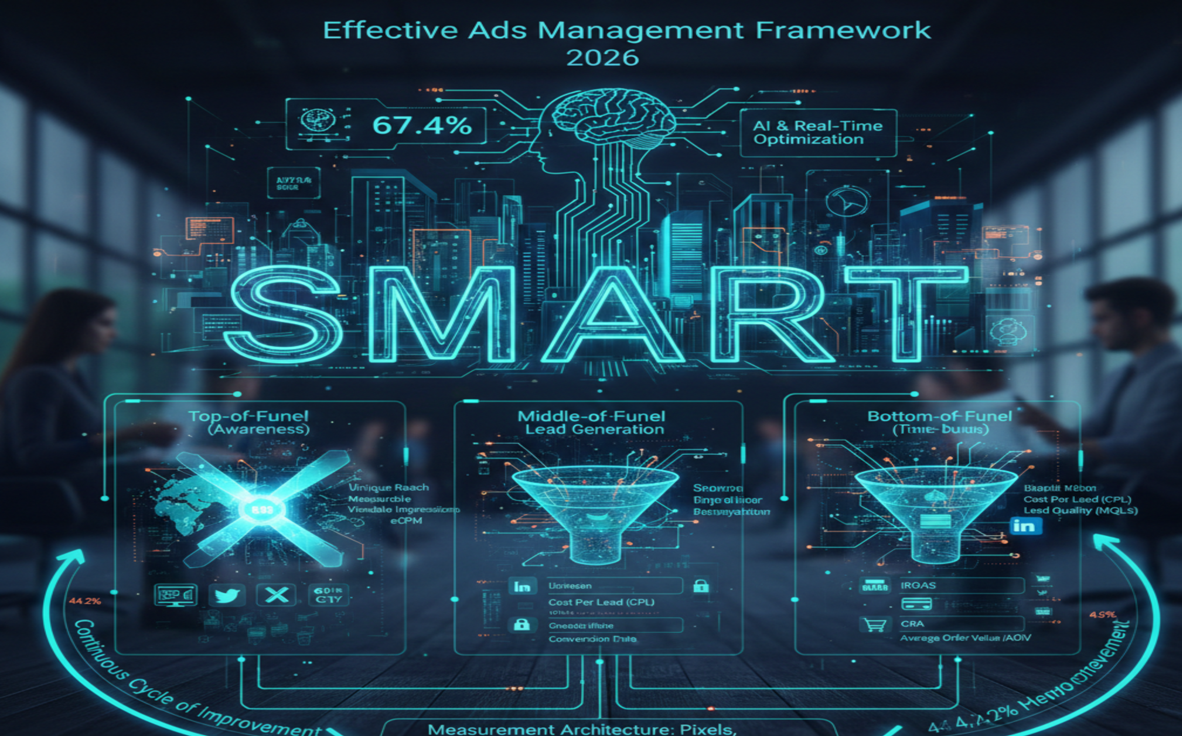
Experts universally recommend the SMART criteria to build out goals for any campaign . Your objectives should be:
- Specific: Clearly define what you want to achieve.
- Measurable: Ensure you can track progress with data.
- Achievable: Set targets that are realistic for your budget and timeline.
- Relevant: Align goals with broader business needs.
- Time-bound: Set a deadline for achievement .
Step 1: Define Your Campaign Objective
The first technical step in any performance-based ad management strategy is to identify the primary business objective. Adobe Advertising best practices suggest that understanding the campaign goal—whether it is the highest possible Return on Ad Spend (ROAS) or the lowest possible Cost Per Acquisition (CPA)—dictates every subsequent decision, from bidding strategy to audience selection .
Here are the most common objectives for ads management campaigns in 2026:
Top-of-Funnel Ads Management Goals: Building Awareness
-
Focus: Reach and visibility.
-
Typical Channels: Social media, programmatic, Connected TV (CTV).
Middle-of-Funnel Campaign Goals: Generating Quality Leads
-
Focus: Acquiring Marketing Qualified Leads (MQLs).
-
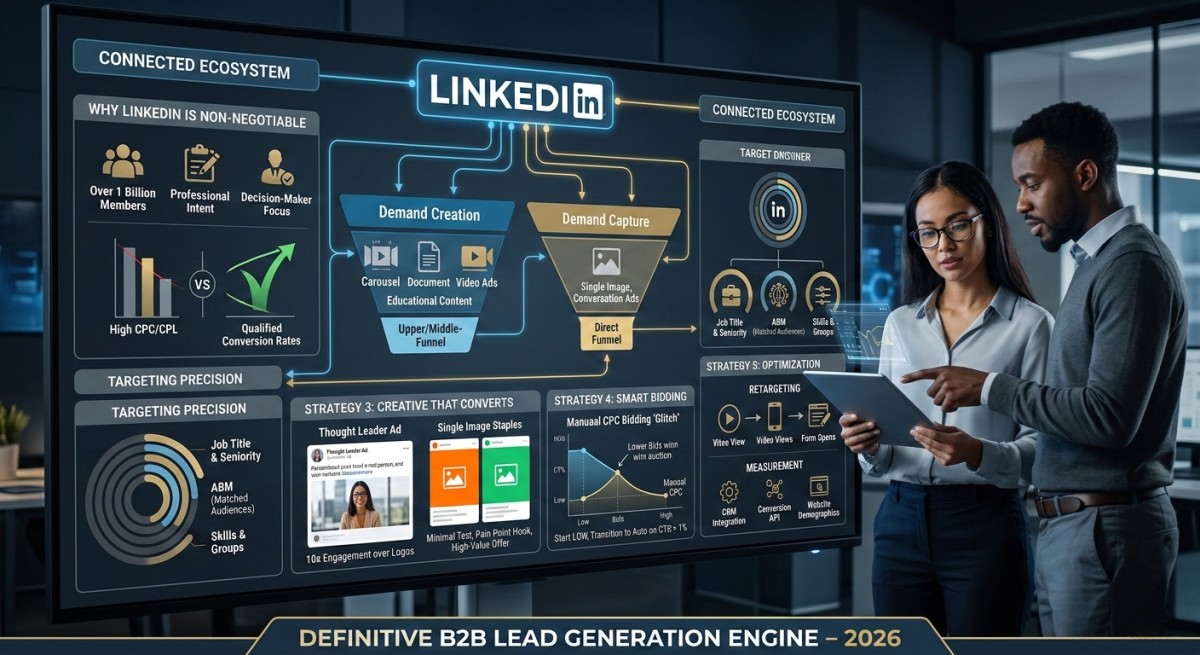
Typical Channels: LinkedIn, lead generation forms on Meta, gated content landing pages
Bottom-of-Funnel Ads Management Goals: Driving Sales
-
Focus: Revenue and transaction volume.
-
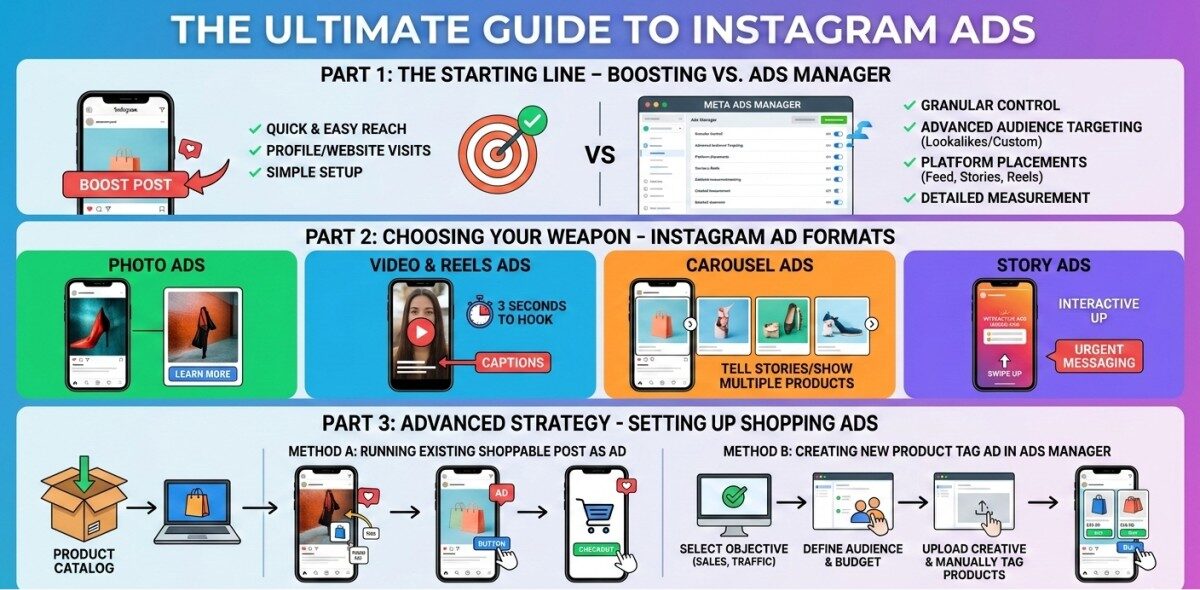
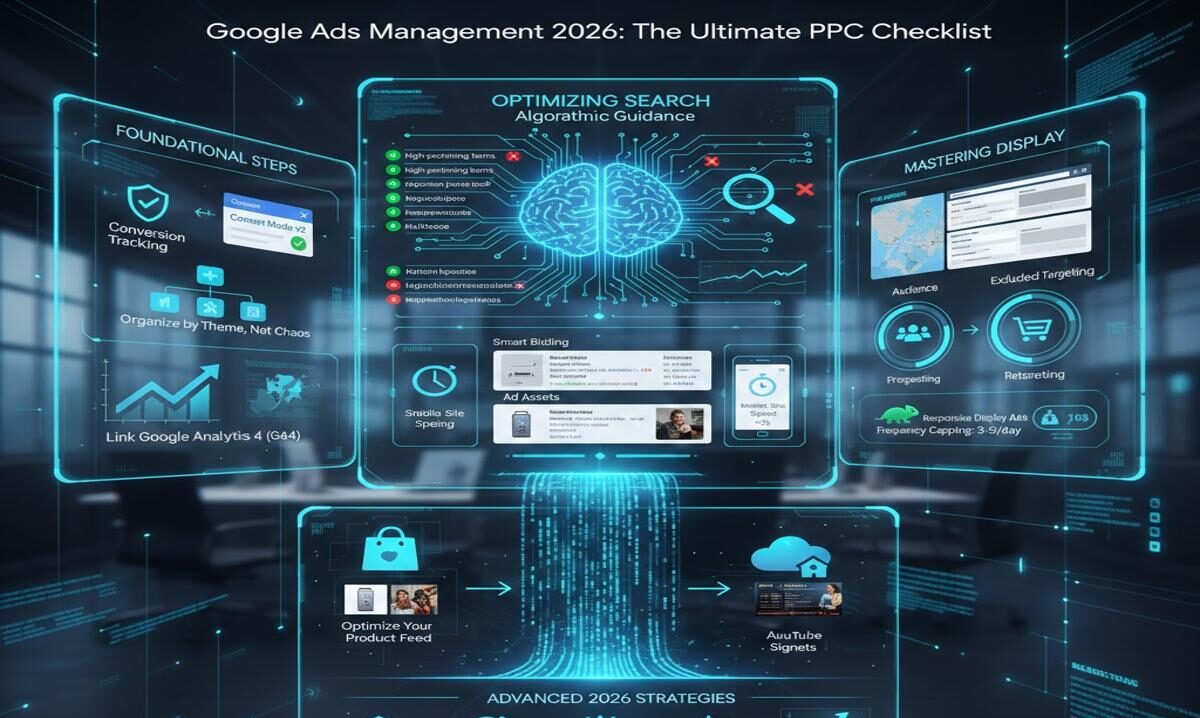
Typical Channels: Google Shopping, retargeting ads, paid social with dynamic product ads.
Engagement and Retention as Strategic Advertising Goals
-
Focus: Likes, comments, shares, and community interaction.
-
Typical Channels: Instagram, Facebook Groups, TikTok.

Step 2:Identify the Right KPIs for Your Ads Management Goals
Once the objective is set, you need to select the metrics that will measure your progress. In 2026, there is a distinct shift away from “vanity metrics” (like simple clicks or impressions) toward metrics that prove business impact .
Here is how to align KPIs with your specific ads management goals:
For Brand Awareness Campaigns
If your goal is to be seen, you need to measure reach and impact.
- Unique Reach: Unlike standard reach, which can count the same person multiple times, unique reach measures how many distinct individuals saw your ad. This prevents frequency waste .
- Viewable Impressions: Ensure your ads are actually seen, not just served .
- eCPM (Effective Cost Per Mille): CPM can be misleading if you buy cheap, unseen inventory. eCPM adjusts cost based on the quality and viewability of the impression .
For Lead Generation Campaigns
Quality trumps quantity here. Getting 1,000 unqualified leads is useless if they don’t convert.
- Cost Per Lead (CPL): How much you pay for each conversion action (form fill, download) .
- Lead Quality (MQLs): This is the top KPI for 39.4% of marketers. It measures how well incoming leads match your ideal customer profile .
- Conversion Rate: The percentage of clicks that turn into leads .
For Sales and Revenue Campaigns
This is where ad management gets intensely analytical. You must prove that your spending generates profit.
- iROAS (Incremental Return on Ad Spend): Standard ROAS often takes credit for sales that would have happened anyway (e.g., a customer who types in your URL directly). iROAS isolates the lift generated specifically by your ads, measuring the sales that would not have occurred without the ad exposure .
- CPA (Cost Per Acquisition): The cost to get a customer to complete a purchase .
- Average Order Value (AOV): Tracking whether ads are bringing in high-value customers .
For Engagement Campaigns
- Engagement Rate: Likes, comments, shares relative to reach .
- Video Completion Rate: For video ads, how many users watch to the end .
Step 3:Align Goals with Business Strategy and Funnel Reality
A common failure in ads management is a misalignment between the campaign strategy and the actual buyer behavior .
The Prospecting vs. Retargeting Split
- Prospecting (Upper Funnel): Use broad targeting, lower bids, and focus on awareness or traffic KPIs. Allow AI to explore and find new users .
- Retargeting (Lower Funnel): Target users who have already shown interest.
Step 4: Set Up Measurement Architecture
Conversion Tracking
- Pixels and APIs: Ensure your conversion tracking pixels are installed correctly. With browser restrictions (like ITP on Safari), using a Conversion API (CAPI) alongside your pixel is crucial for server-to-server data reliability.
- Offline Conversions: If you take phone calls or have in-store sales, upload this data back to the ad platforms.
Step 5: The Role of AI and Real-Time Optimization
In 2026, AI is a standard team member. Currently, 67.4% of marketing teams already use AI for campaign performance optimization, and another 21.9% plan to start soon .
How AI Uses Your Ads Management Goals to Optimize Performance
Once your goals and KPIs are set (e.g., Target CPA of $50), platforms like Google and Meta use machine learning to find users most likely to convert at that cost. However, the AI is only as good as the signals it receives.
Conclusion: The Continuous Cycle of Improvement
Setting clear goals and KPIs is not a one-time task at the beginning of a campaign; it is a continuous cycle. The most successful teams (44.2% of whom analyze performance weekly) treat campaigns as “living initiatives” .
By starting with a SMART goal, aligning your KPIs to the correct funnel stage (using modern metrics like iROAS), and ensuring your data architecture is sound, you build a digital ad management framework that can withstand budget scrutiny and deliver genuine business growth.