








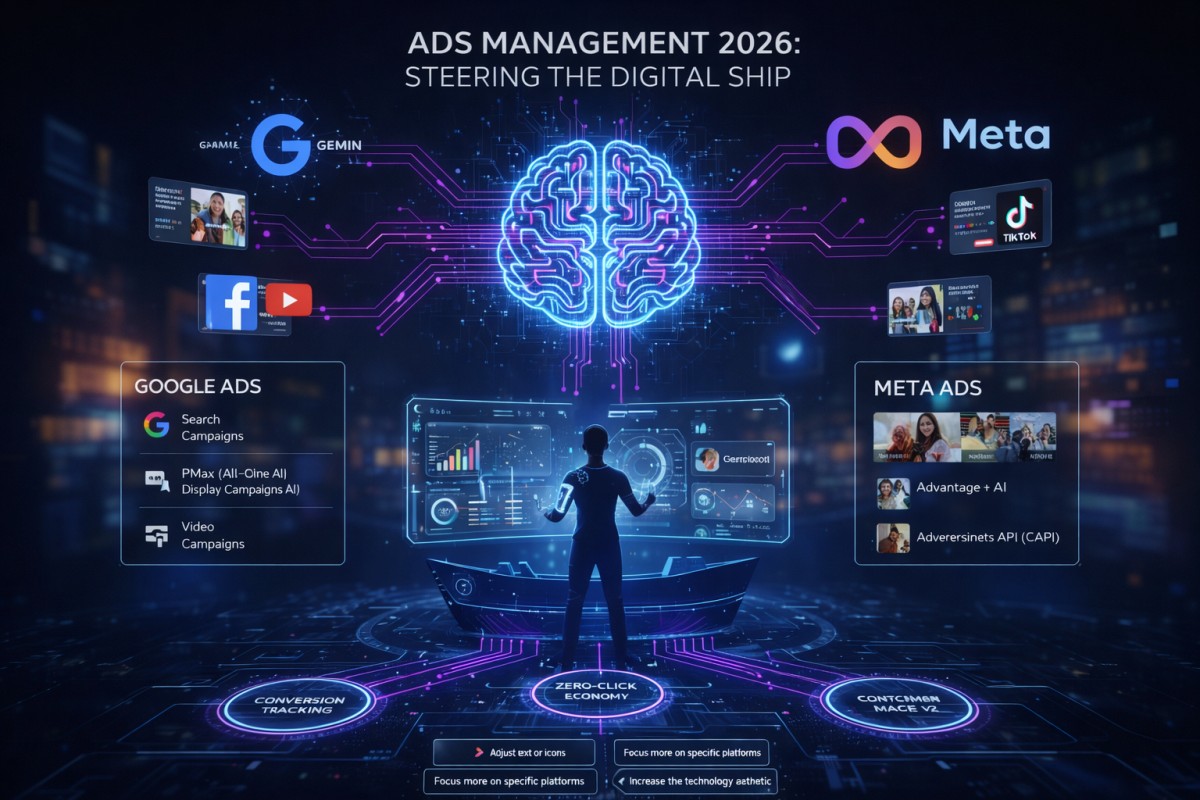
The digital landscape in 2026 is more complex—and more exciting—than ever before. Every second, millions of Google searches are performed, and countless hours of video are consumed on platforms like YouTube and TikTok . For businesses, getting noticed in this chaos requires more than just a great website; it requires a strategic approach to visibility. This is where ads management comes in.
If you are a beginner looking to understand how to promote a business online, you have come to the right place. This guide will explain what ads management is, how it has evolved in 2026, the core platforms you need to know, and the fundamental strategies to ensure success.
What is Ads Management?
At its core, ads management is the process of creating, executing, and overseeing online advertising campaigns to achieve specific business goals. It is no longer just about “boosting a post” or picking a few keywords.
The Evolution of Ads Management: The 2026 Landscape
If you are learning about ads management in 2026, you are entering the field at a pivotal moment. The “old way” of manually adjusting every lever—like fine-tuning keyword bids by the penny—is fading. Today, management is less about pulling levers and more about steering a ship .
Here are the key shifts defining the 2026 landscape:
1. The AI-First Paradigm
Artificial Intelligence is no longer a “nice-to-have” feature; it is the engine room of every major ad platform. Google’s AI (via tools like Gemini) and Meta’s machine learning algorithms now handle the heavy lifting of bidding, placement, and even ad creation .
2. The Rise of Performance Max (PMax) and AI Max
Google’s Performance Max campaigns have become the default for many advertisers, allowing ads to appear across all of Google’s inventory (Search, YouTube, Gmail, Display) from a single campaign. In 2025, Google introduced “AI Max for Search,” which moves beyond keywords to understand the semantic intent of a query .
3. The Zero-Click Economy
With Google’s AI Overviews (previously known as SGE) answering questions directly on the search results page, the classic “10 blue links” are changing. Click-through rates for some queries have dropped, but the traffic that does come through is often higher intent—what experts call “Transaction Survivors” .
4. First-Party Data is King
With the deprecation of third-party cookies, targeted advertising has fundamentally changed. Success in 2026 depends on how well you leverage your own data. This includes email lists, customer purchase history, and website behavior. Platforms like Meta and Google prioritize first-party data to create “Customer Match” audiences and lookalike models .
Core Components of Ads Management in 2026
To manage ads effectively, you need to understand the different channels available. Most beginners will cut their teeth on two major ecosystems.
Google Ads Management
Google remains the 800-pound gorilla of advertising, holding the lion’s share of the market .
- Search Campaigns: Text ads that appear on Google Search results. These are intent-based—you are capturing users actively looking for something.
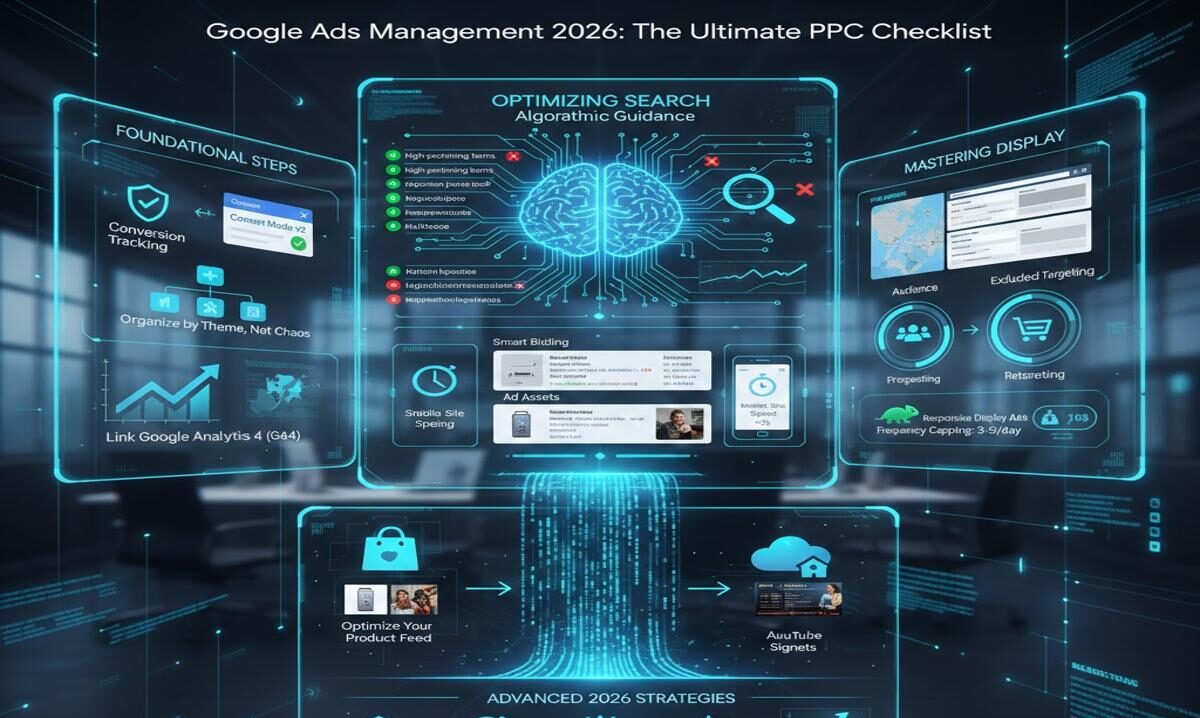
- Performance Max (PMax): The all-in-one campaign type that uses AI to show ads across all of Google’s properties (Search, Display, YouTube, Maps, Gmail). In 2026, mastering PMax is essential for eCommerce .
- Display Campaigns: Visual banner ads shown across the millions of websites in Google’s Display Network.
- Video Campaigns: Ads that run on YouTube. With short attention spans, these need to be engaging—often working well with short-form, authentic content .
Facebook (Meta) Ads Management
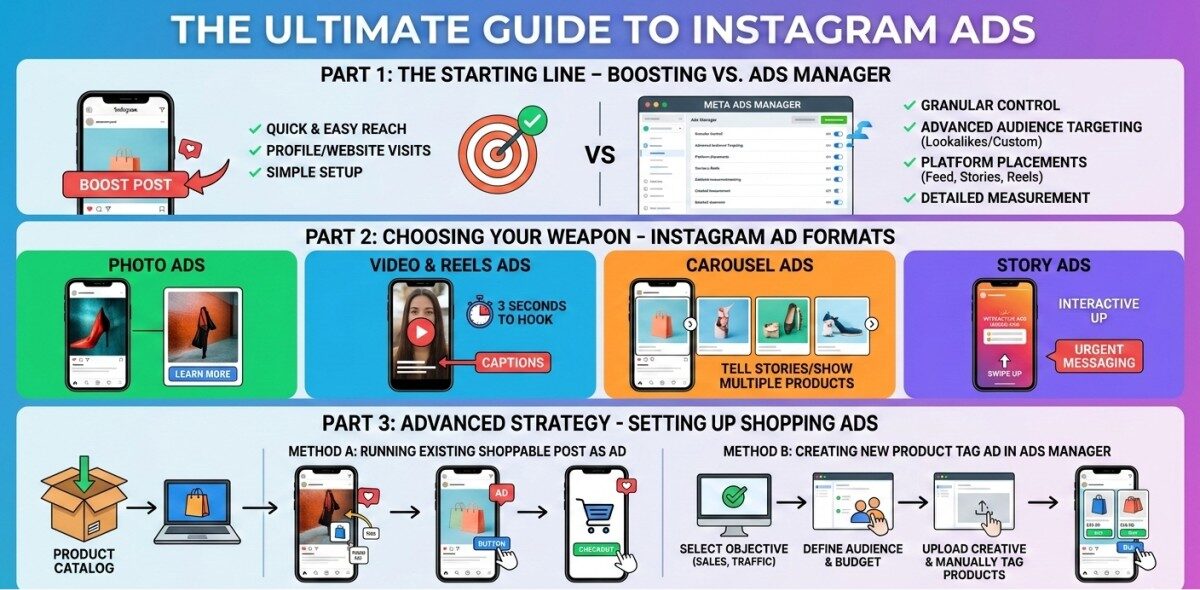
Meta’s platforms (Facebook, Instagram, Threads) are powerhouses for discovery and brand building. Management here focuses heavily on visual creativity and audience nuance.
Management also involves using Advantage+ campaigns, Meta’s AI-driven tool that optimizes creative and targeting, and setting up the Conversions API (CAPI) to track data reliably despite browser restrictions .
The Ads Manager’s Toolkit: Key Strategies for Success
Effective ads management requires a strategic toolkit.
1. Data Foundation: The “3 C’s”
Before launching any campaign, you must ensure your measurement is correct.
- Conversion Tracking: Can the platform reliably measure when someone buys or signs up?
- Consent Mode v2: Is your website correctly capturing user consent for cookies, especially in regions with strict privacy laws?
- Customer Match: Are you uploading your customer lists to the ad platforms so they can find similar people?
2. Audience Targeting and Signals
In an AI-driven world, you don’t just target audiences; you provide signals.
- First-Party Data: Upload your email lists to create “Lookalike Audiences” .
- Audience Signals for PMax: When using Performance Max, you can give Google hints about who your best customers are. This guides the AI and prevents it from wasting budget .
- Negative Targeting: It is just as important to tell the algorithm who not to show your ads to, such as existing customers for an acquisition campaign or people searching for irrelevant terms .
3. Creative Velocity and Authenticity
With automation handling the math, the human touch is needed for the magic: the creative.
- Authenticity Wins: In 2026, users are tired of stock photos and generic copy. Ads that feature real people, imperfect shots, and honest stories cut through the noise .
- Creative Testing: AI tools can now generate multiple variations of images and copy. An ads manager must oversee this, using the platform’s tools (like Meta’s Dynamic Creative) to test different headlines and images to see what resonates .
4. Landing Page Optimization
Driving a click is only half the battle; the destination matters just as much.
- Relevance: Your landing page must deliver on the promise of the ad. If the ad mentions a 20% discount on running shoes, that offer must be front and center on the page.
- User Experience: In a “zero-click” world, the pages that convert are those that provide a seamless, frictionless experience .
Conclusion: The Future of Ads Management
So, what is ads management? In 2026, it is the art and science of guiding powerful AI tools toward a profitable outcome. It is a blend of technical skill (setting up tracking, managing feeds), creative intuition (knowing what message will resonate), and strategic thinking (deciding where and how to compete).
For beginners, the field offers immense opportunity. The tools are more powerful than ever, but they require skilled human operators to provide context, data, and creativity.